LAUT ARU — Sejarah kemerdekaan Indonesia tidak hanya ditulis dengan tinta, melainkan juga dengan darah para pahlawan yang gugur di medan laga. Salah satu peristiwa paling dramatis dan bersejarah adalah Pertempuran Laut Aru yang terjadi pada 15 Januari 1962. Pertempuran tidak seimbang di perairan Maluku ini menjadi simbol keberanian mutlak prajurit Tentara Nasional Indonesia Angkatan Laut (TNI AL) demi mempertahankan kedaulatan Ibu Pertiwi.
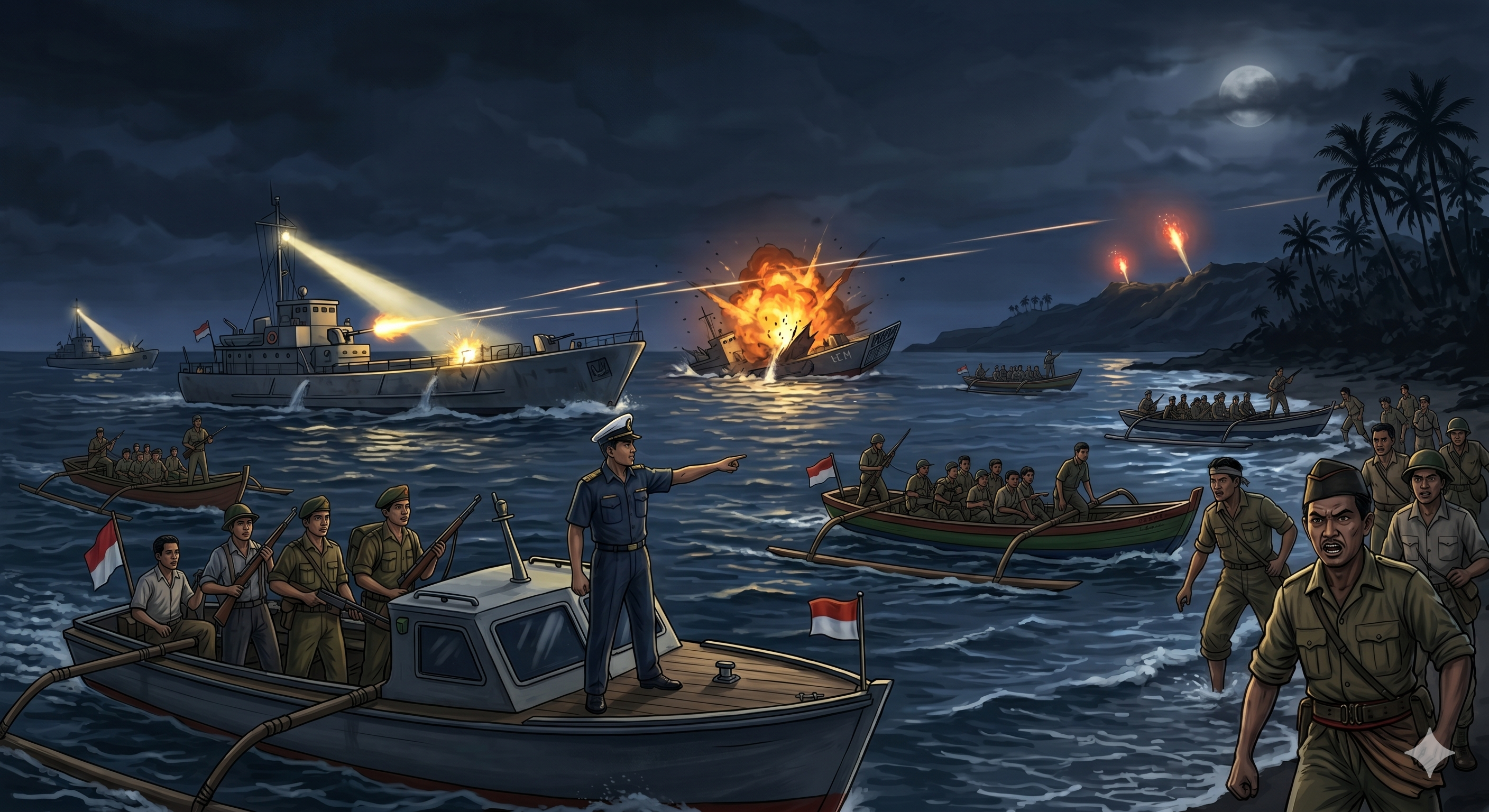
Pertempuran ini berakar dari konflik perebutan wilayah Irian Barat (sekarang Papua) antara Pemerintah Indonesia dan Kerajaan Belanda. Pada Desember 1961, Presiden Soekarno mengumandangkan Tri Komando Rakyat (Trikora) untuk membebaskan Irian Barat dari cengkeraman kolonial. Sebagai bagian dari operasi tersebut, TNI AL menggelar misi rahasia (infiltrasi) untuk mendaratkan pasukan di pesisir Kaimana. Tiga kapal cepat torpedo (Motor Torpedo Boat atau MTB) jenis Jaguar milik Indonesia dikerahkan: RI Macan Tutul, RI Macan Kumbang, dan RI Harimau. Misi yang seharusnya berjalan senyap ini dipimpin langsung oleh Komodor Yos Sudarso, yang saat itu menjabat sebagai Deputi II Kasal (Kepala Staf Angkatan Laut).
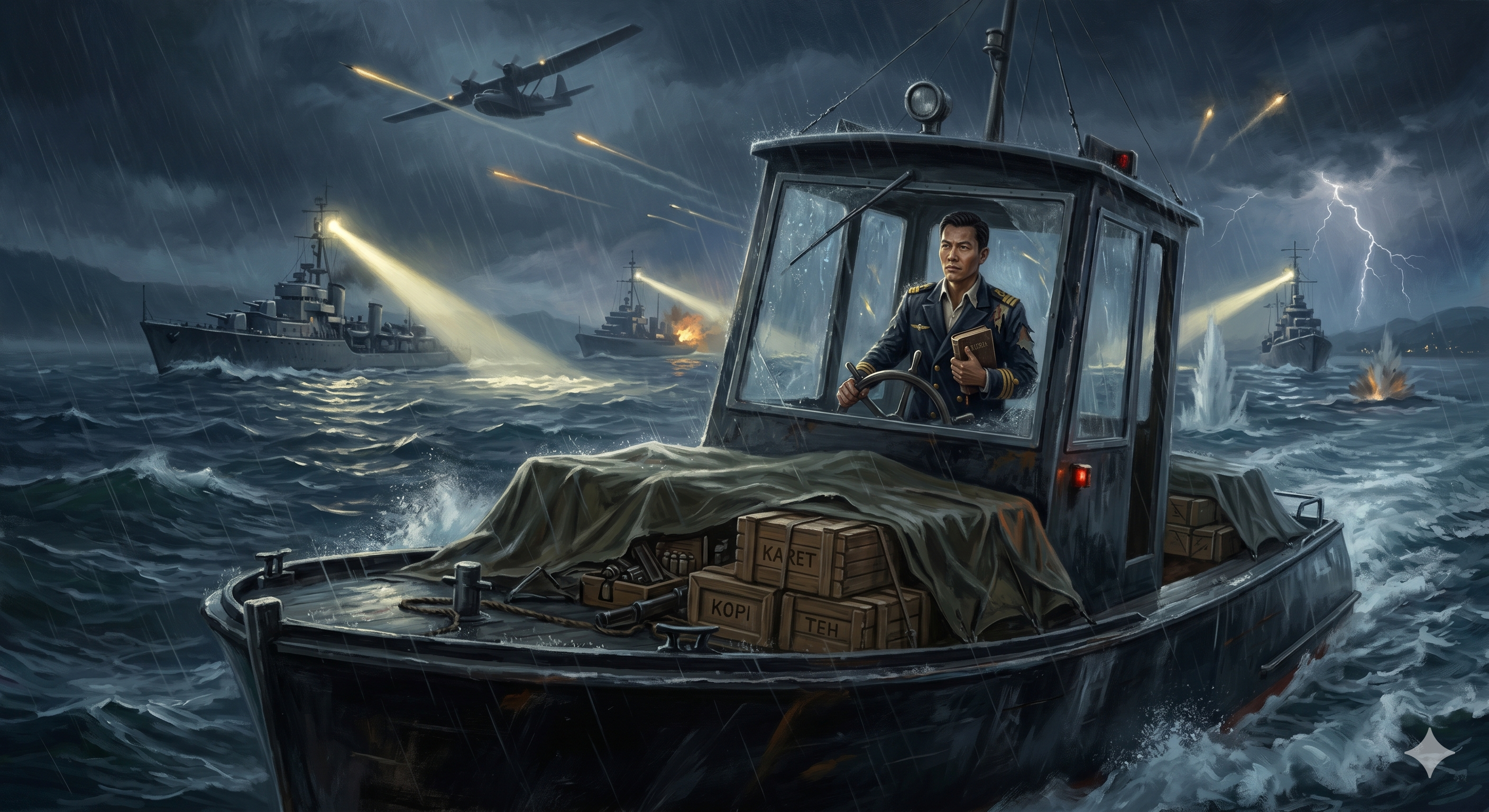
Pada malam hari tanggal 15 Januari 1962, ketika ketiga kapal MTB Indonesia sedang melaju di perairan Laut Aru, mereka tiba-tiba diadang oleh armada tempur Belanda. Pihak musuh yang memiliki intelijen lebih unggul telah mendeteksi pergerakan kapal Indonesia menggunakan radar. Belanda mengerahkan kapal perang jenis destroyer yang berukuran jauh lebih besar, HNLMS Evertsen, lengkap dengan bantuan tembakan dari pesawat pemburu jenis Neptune dan Firefly. Perbedaan kekuatan sangat mencolok: Kapal Indonesia hanya bermodalkan meriam kecil dan torpedo tanpa perlindungan udara, sedangkan kapal Belanda dilengkapi meriam kaliber besar dengan jarak tembak yang jauh lebih unggul.
Melihat posisi armada Indonesia yang terjepit dan kalah persenjataan, Komodor Yos Sudarso mengambil keputusan berani sekaligus fatal. Beliau memerintahkan RI Macan Tutul—kapal yang ditungganginya bersama Kapten Wiratno—untuk maju ke depan memancing tembakan musuh. Tindakan ini dilakukan sengaja sebagai umpan agar dua kapal lainnya, RI Harimau dan RI Macan Kumbang, dapat bermanuver untuk menyelamatkan diri dan mundur.
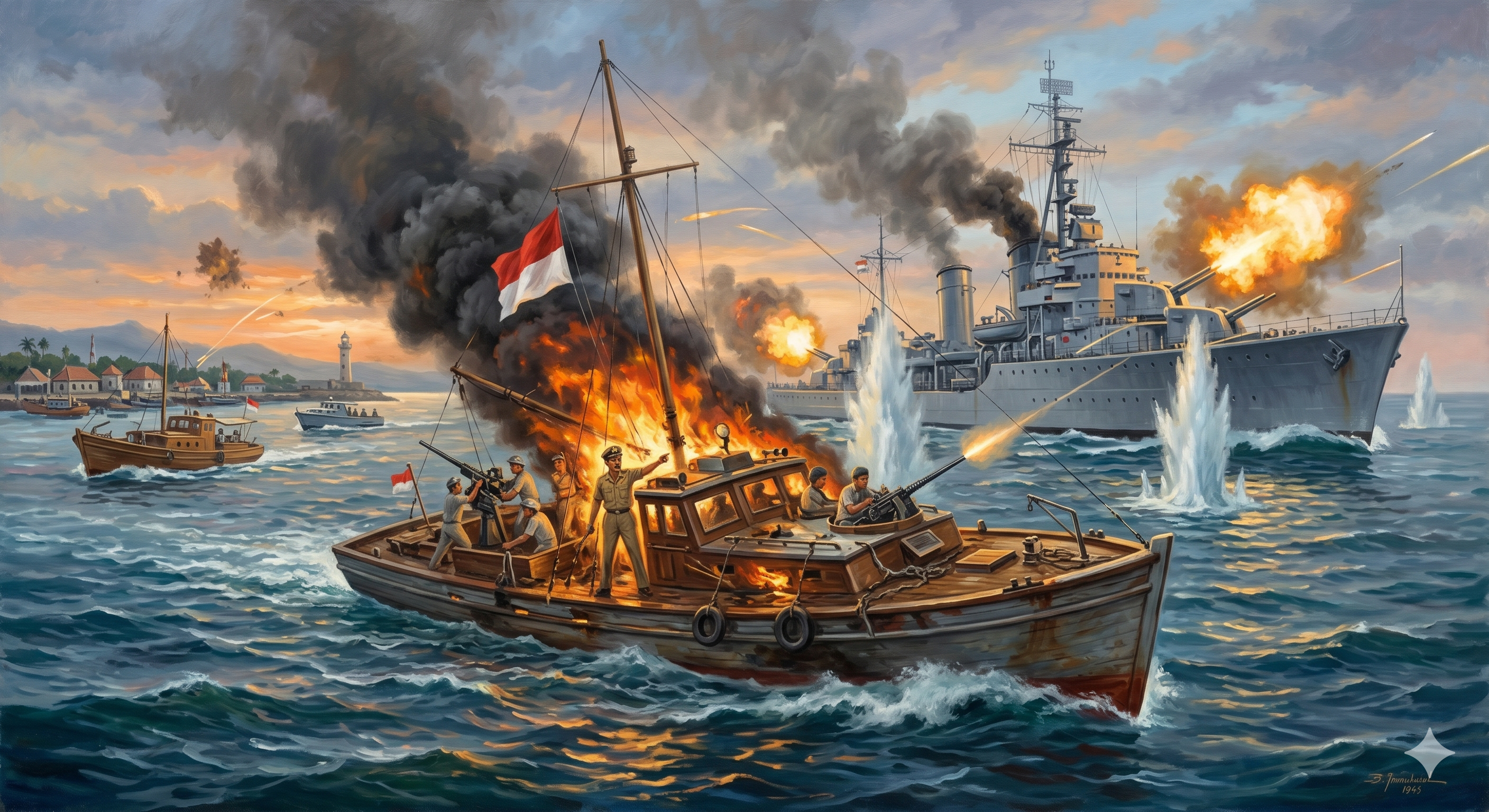
Di tengah hujan peluru dan bom dari laut dan udara, RI Macan Tutul terbakar hebat setelah terkena tembakan telak dari HNLMS Evertsen. Sebelum kapal tersebut tenggelam ke dasar Laut Aru, Komodor Yos Sudarso sempat mengumandangkan pesan terakhirnya melalui radio pangkalan yang membakar semangat: "Kobarkan semangat pertempuran!" Komodor Yos Sudarso bersama sekitar 25 kru RI Macan Tutul gugur sebagai kusuma bangsa dalam peristiwa tersebut.
Meski mengorbankan satu kapal dan puluhan nyawa, pertempuran ini justru memicu gelombang solidaritas nasional dan internasional yang mempercepat proses pengembalian Irian Barat ke pangkuan NKRI pada tahun 1963. Untuk menghormati jasa dan pengorbanan para prajurit yang gugur, setiap tanggal 15 Januari diperingati oleh bangsa Indonesia sebagai Hari Dharma Samudera. Pertempuran Laut Aru bukan sekadar cerita kekalahan taktis, melainkan sebuah monumen kemenangan moral yang mengajarkan generasi penerus tentang arti sejati dari loyalitas, keberanian, dan cinta tanah air.
ARU SEA — The history of Indonesian independence was written not only with ink, but also with the blood of heroes who fell in battle. One of the most dramatic and historical events is the Battle of Aru Sea which took place on January 15, 1962. This unbalanced battle in Maluku waters became a symbol of absolute courage of the Indonesian Navy (TNI AL) soldiers to defend the sovereignty of the Motherland.
This battle was rooted in the conflict over the territory of West Irian (now Papua) between the Indonesian Government and the Kingdom of the Netherlands. In December 1961, President Sukarno proclaimed the Tri Komando Rakyat (Trikora) to liberate West Irian from colonial grasp. As part of the operation, the Indonesian Navy conducted a secret infiltration mission to land troops on the Kaimana coast. Three Indonesian Jaguar-class Motor Torpedo Boats (MTBs) were deployed: RI Macan Tutul, RI Macan Kumbang, and RI Harimau. This mission, which was supposed to run silently, was led directly by Commodore Yos Sudarso, who then served as Deputy II Chief of Staff of the Navy.
On the night of January 15, 1962, when the three Indonesian MTB ships were cruising in the waters of the Aru Sea, they were suddenly intercepted by a Dutch combat fleet. The enemy, possessing superior intelligence, had detected the movement of the Indonesian ships using radar. The Dutch deployed a much larger destroyer-type warship, HNLMS Evertsen, complete with fire support from Neptune and Firefly fighter aircraft. The disparity in strength was striking: Indonesian ships only carried small cannons and torpedoes without air protection, while Dutch ships were equipped with large-caliber guns with a far superior firing range.
Seeing the Indonesian fleet's cornered position and outgunned status, Commodore Yos Sudarso made a brave yet fatal decision. He ordered RI Macan Tutul—the ship he boarded along with Captain Wiratno—to advance to the front to draw enemy fire. This action was deliberately done as a decoy so that the other two ships, RI Harimau and RI Macan Kumbang, could maneuver to save themselves and retreat.
Amidst a rain of bullets and bombs from sea and air, RI Macan Tutul burned fiercely after being hit hard by HNLMS Evertsen. Before the ship sank to the bottom of the Aru Sea, Commodore Yos Sudarso managed to broadcast his final inspiring message via base radio: "Kindle the spirit of battle!" Commodore Yos Sudarso along with about 25 crew members of RI Macan Tutul fell as heroes of the nation in that event.
Despite sacrificing one ship and dozens of lives, this battle actually triggered a wave of national and international solidarity that accelerated the process of returning West Irian to the lap of the Republic of Indonesia in 1963. To honor the service and sacrifice of the fallen soldiers, every January 15 is commemorated by the Indonesian nation as Hari Dharma Samudera. The Battle of Aru Sea is not just a story of tactical defeat, but a monument of moral victory that teaches future generations about the true meaning of loyalty, courage, and love for the homeland.